

Stains matched to a treatment before they set
Paver Stain Removal in Dunedin, FL
Call (727) 493-9640 and a local contractor will look at your Dunedin pavers and match a treatment to each stain.
- Brings out deeper paver color
- Fresh joint sand helps lock pavers in place
- Gives weeds less room to grow
- Makes the surface easier to keep clean
- Free estimate, no obligation
Request a Free Estimate
Free, no obligation.
Who removes stains from pavers in Dunedin, and how quickly do they reply?
A local contractor can treat paver stains at your Dunedin, FL home, and a reply arrives within 1 business day, usually much sooner. The look and the estimate are free, with no obligation. To describe your spots, call (727) 493-9640.
A stain is a mark with a cause, whether that is a dripping car, a rusty chair leg or a pile of wet leaves. Pavers soak these up, and Rusty's Pro Wash and Seal says untreated stains can set in for good. The sooner a contractor sees the mark, the more likely it lifts. Share a photo and the location when you ask for a free estimate.
Does stain removal cover my part of the Dunedin area?
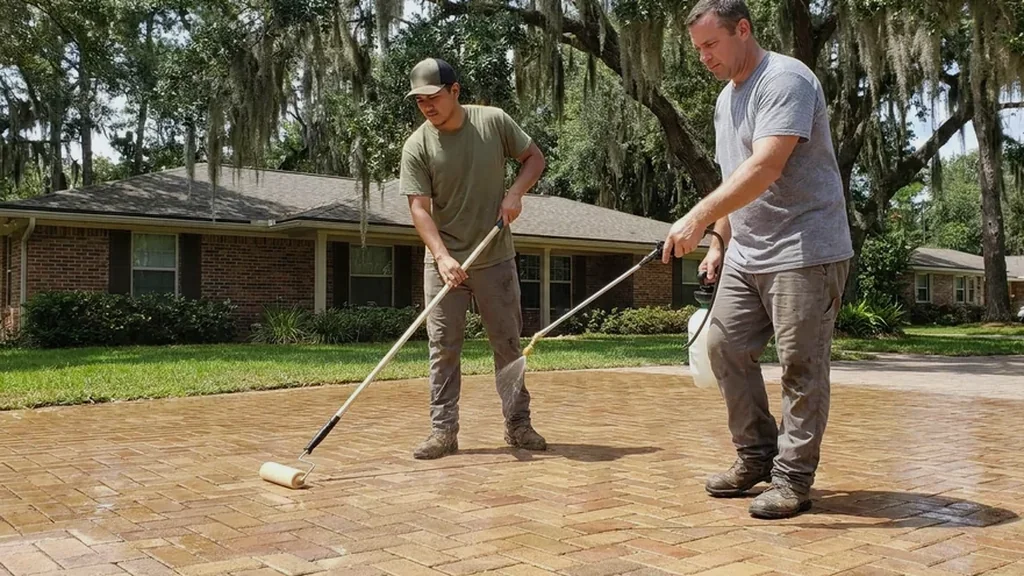
What kind of stain do I have on my Dunedin pavers?
Naming the stain comes first, because each type has a different treatment. Cambridge Pavingstones gives separate guidance for oil, rust, leaf tannin, paint, efflorescence, mold and tar. The table below maps the usual suspects around a Dunedin home. To have a contractor sort yours out, call (727) 493-9640.
| Stain | Common source near Dunedin homes | What the sources say |
|---|---|---|
| Rust | Sprinkler water, patio furniture, fertilizer | Needs a rust product. Cambridge Pavingstones warns it can damage sealer |
| Oil and grease | Car drips, grill drips, a golf cart | Act fast. Penetrated oil needs a remover left for six to eight hours |
| Leaf tannin | Live oak leaves and acorns | Comes back each season while the leaves keep falling |
| White patches | Salts in the stone or sprinkler scale | Efflorescence fades over time. A remover can speed it up |
| Green or black film | Shade, damp air, mold | Mold and mildew have their own treatment |
Facts from Cambridge Pavingstones, Unilock and Rusty's Pro Wash and Seal. A contractor tests a hidden spot first.
How do I tell rust from tannin, and why does it matter?
Color and source tell most of the story. Rust is orange to red brown and sits under sprinklers or furniture, while tannin is a tan to brown stain under oaks and shrubs. Unilock says organic stains such as leaves and bird droppings call for a different product than rust does. Using the wrong one can fade the surface or leave a ring. Send a photo when you ask for a free estimate.
Why do Dunedin sprinklers leave orange marks on pavers?
Irrigation water carries minerals and sometimes iron, and it lands on the same strip every morning. Cambridge Pavingstones puts sprinklers among the rust sources, and Rusty's says overspray leaves mineral scale on pavers. Dunedin sends reclaimed water to some properties for landscape irrigation, so check which water your heads use. Moving a head fixes the cause. To plan around it, call (727) 493-9640.
What about oil from a car or golf cart on the drive?
Oil is one of the easier stains to treat if it is caught early. Unilock says to dab, not rub, and to let dish soap sit 20 to 30 minutes, and for dried oil to use a granular absorbent for about six hours. Cambridge Pavingstones leaves a remover on deep oil for six to eight hours until it dries to powder. Golf carts are street legal across about 60 percent of Dunedin under a 2011 ordinance, and any cart that drips leaves a mark like a car does. Ask what the contractor uses when you ask for a free estimate.
Will oak leaf stains keep coming back?
They can, while the oaks stay. Cambridge Pavingstones says leaf tannin returns every year as leaves fall, and suggests deciding whether to live with the mark or manage the tree. Sweeping leaves off quickly also cuts the contact time. To plan a yearly check, call (727) 493-9640.
What does paver stain removal cost in Dunedin?
No page read for this site sets a price for stain removal alone. Rusty's Pro Wash and Seal treats oil and rust removal as needed inside professional cleaning, so the numbers below are built from the published pieces. Cleaning, sanding and sealing runs $1.25 to $2.50 per square foot, and most companies set a minimum charge of $500 to $1,000. To get a figure for your marks, ask for a free estimate.
A single stain on a small patio will usually land at the minimum. A patio with many stains costs more, because treatments differ by type. If the whole surface has also gone white or dull, read about paver restoration, or call (727) 493-9640.
| Piece of the job | Size or basis | Published figure |
|---|---|---|
| Clean, sand and seal, with oil and rust treated as needed | Per square foot | $1.25 to $2.50 |
| Minimum project charge | Small jobs | $500 to $1,000 |
| Small patio | 250 sq ft example | $500 to $1,000 |
| Routine cleaning and sealing | Typical home | $1,000 to $3,000 |
Source: Rusty's Pro Wash and Seal, Tampa Bay paver sealing cost guide. It publishes no separate stain removal rate.
What about paint, tar and tire marks on a Dunedin driveway?
Each has its own rules. Cambridge Pavingstones says fresh paint should be blotted, never wiped, because wiping spreads it, and that latex paint is harder to remove once it dries. Tar and asphalt use a different product from oil, and tire skid marks can be stubborn enough that replacing a stone on a small area is the practical fix. Tell the contractor what touched the surface when you ask for a free estimate.
A driveway in Dunedin sees all of these at some point, from a dripping car to a stray paint can. A quick description by phone helps a contractor bring the right products. To start that talk, call (727) 493-9640.
Is green or black film on Dunedin pavers a stain?
It looks like one, but it is mold or algae growing on a damp surface. Cambridge Pavingstones gives mold and mildew their own treatment, and Unilock says treating organic growth also kills organisms that can make marks return. Dunedin has a humid subtropical climate, so shaded pavers stay damp and green growth comes back. To have a patch looked at, call (727) 493-9640.
How do I keep stains from coming back on Dunedin pavers?
Remove the cause, then keep the surface easy to clean. Move sprinkler heads that spray pavers, put felt or plastic under steel furniture and sweep leaves before they soak. Rusty's says sealing does not stop weeds on its own and that sealing over a stain traps it, so the clean comes first. Ask the contractor about each cause on your property when you ask for a free estimate.
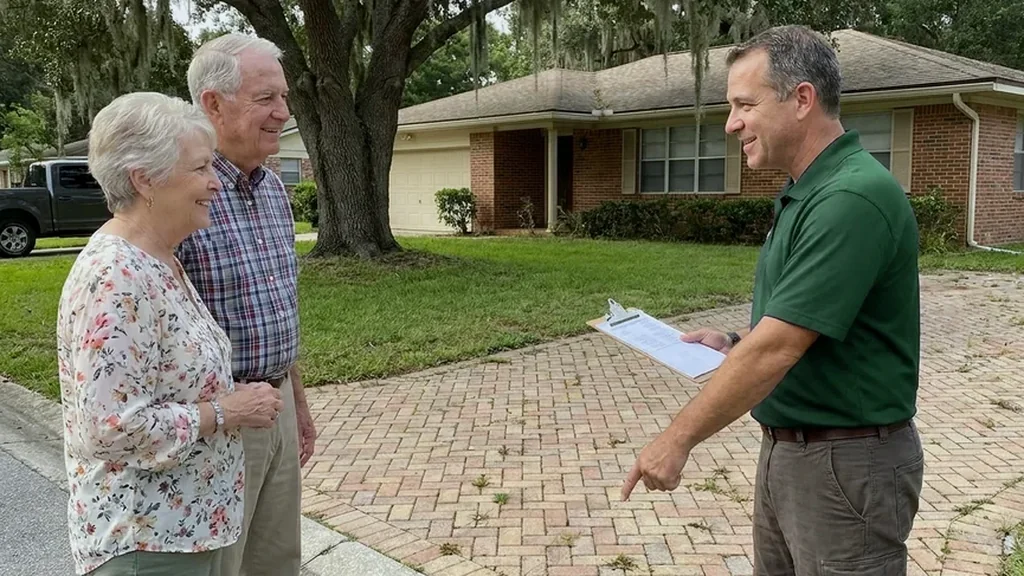
Can stains be removed before I seal my pavers?
They should be. Rusty's says sealing over stains or algae traps them under the coat. That is why stain work sits ahead of the sealer in a normal job. If your pavers are already sealed, a contractor may need to look at what the treatment does to the coat first. Mention the age of the sealer when you ask for a free estimate.
What is the stain removal process, from test patch to rinse?
A careful job follows a set order, and a contractor should describe it before starting. Cambridge Pavingstones and Unilock both start with a hidden test. To hear the plan for your stain, call (727) 493-9640.
1. Identify
Find the source and the stain type, such as rust, oil, tannin or mineral scale.
2. Test
Try the product on one or two stones in a hidden spot, as Cambridge Pavingstones advises.
3. Treat
Apply the product that matches the stain. Rinse well after each step.
4. Repeat if needed
Cambridge Pavingstones notes that rust can need several applications.
5. Dry and review
Check the result in dry light, then decide on joint sand and a new coat.
Which marks may never fully come out?
Some do not. Cambridge Pavingstones says hardened mortar is extremely difficult to remove and may mean replacing the paver. Tire skid marks on small areas may call for new pavers too. Rusty's says stains that sit untreated can set in permanently. Ask the contractor about the odds for each mark when you ask for a free estimate.
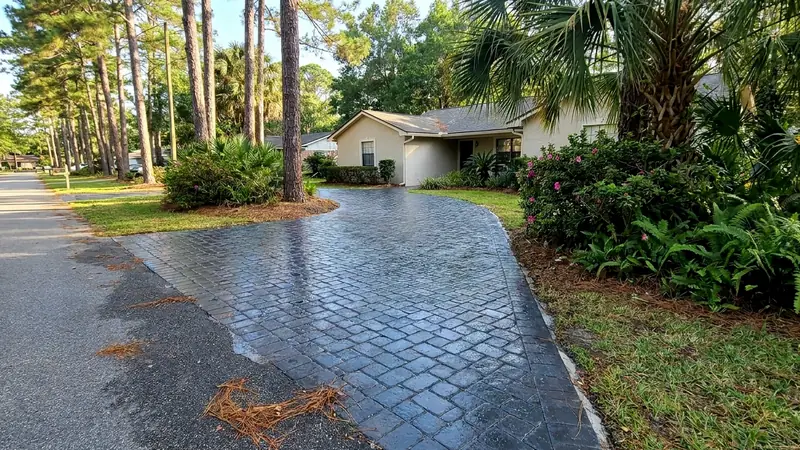
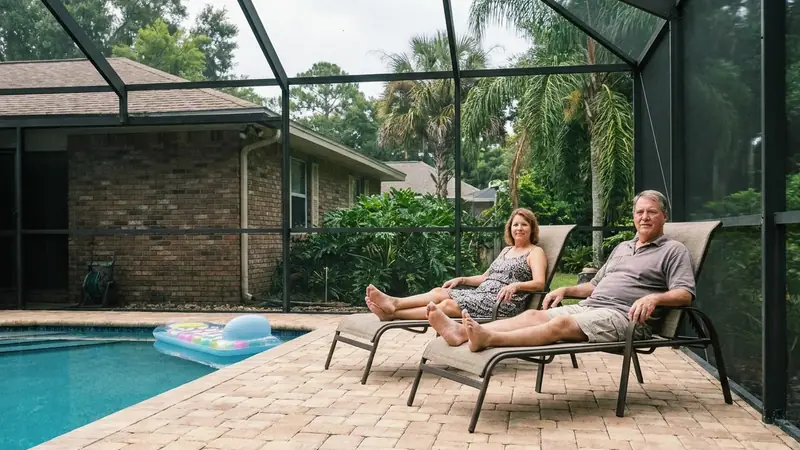
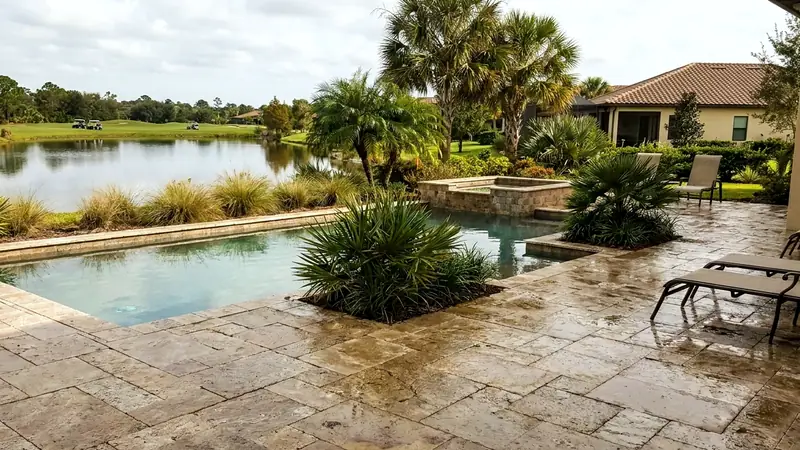
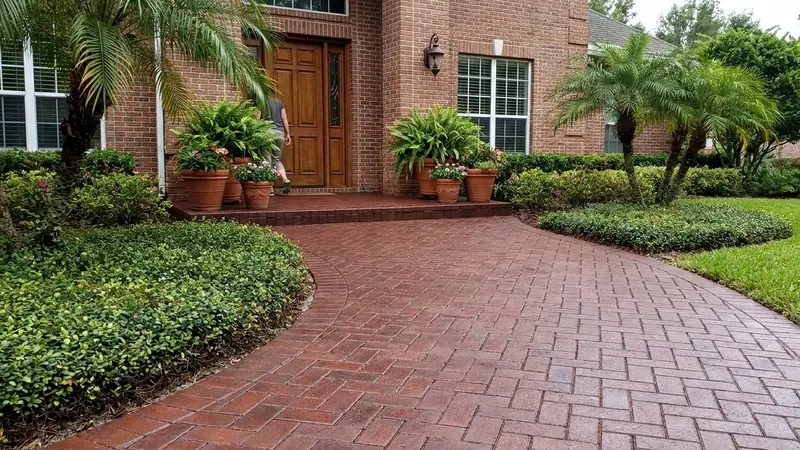
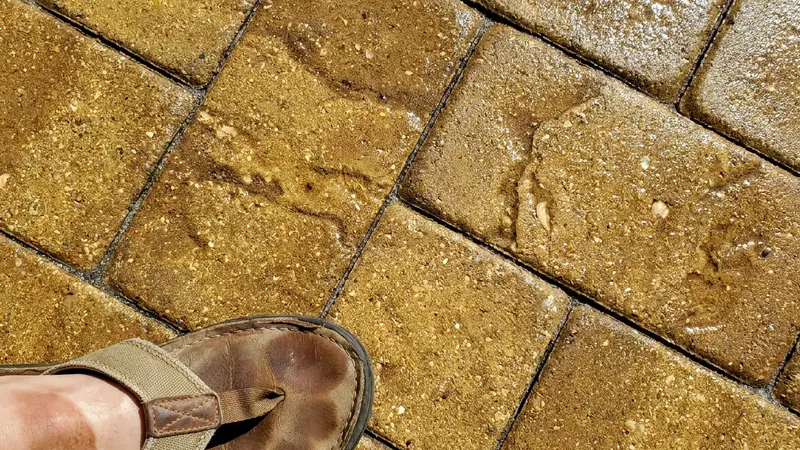
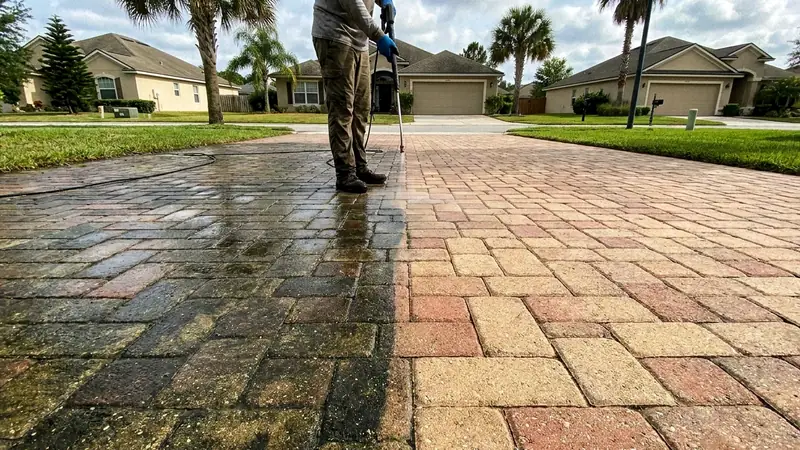
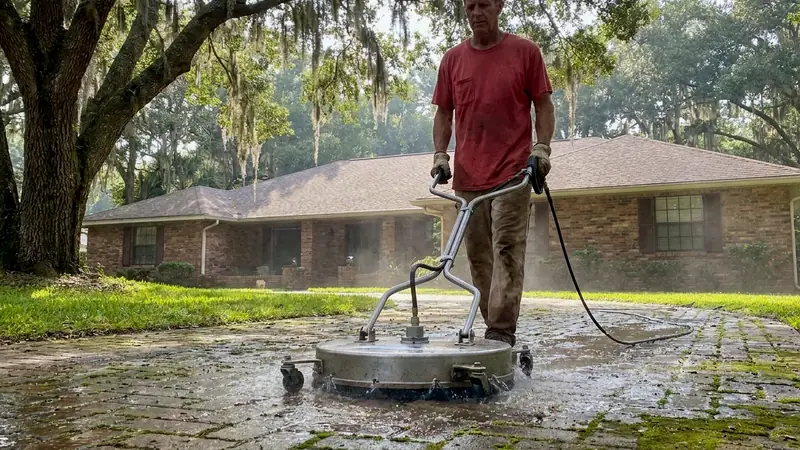
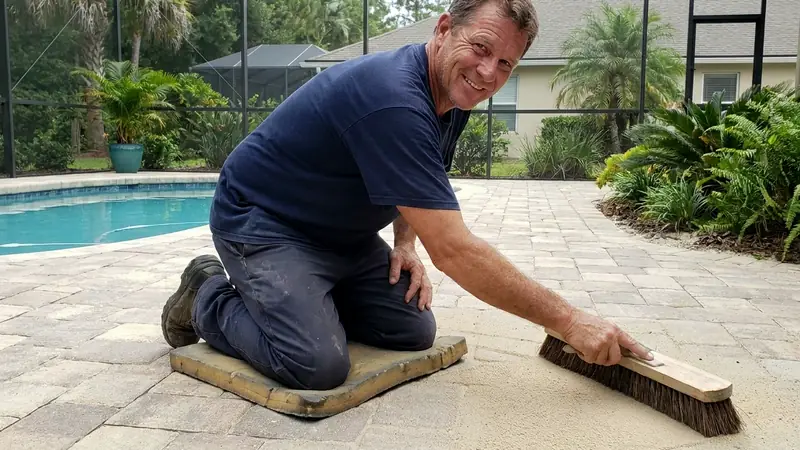
What do pavers look like once the stains are gone in Dunedin?
Frequently Asked Questions
How can I remove stains from my pavers?
Match the treatment to the stain. Cambridge Pavingstones lists a separate approach for oil, rust, leaf tannin, paint, efflorescence and mold, and says to test one or two stones in a hidden spot first. Rusty's says stains set in for good if they are left untreated, and that sealing over them traps them.
What is the average cost to seal pavers in Florida?
Tampa Bay companies publish $1.25 to $2.50 per square foot to clean, sand and seal, per Rusty's Pro Wash and Seal. Most set a minimum of $500 to $1,000. Oil and rust treatment is done as needed inside the cleaning step, with no separate price on that page.
Should pavers be sealed in Florida?
Often yes. Rusty's says strong sun, heavy rain and humidity make sealing matter more here, and a sealed surface soaks up less. Sealing does not make stone stain proof, though, so a spill still needs a quick rinse.
Which stain remover works on pavers?
It depends on the stain, which is why one bottle rarely does it all. Cambridge Pavingstones lists a different product for rust than for oil or efflorescence, and warns that rust remover can damage sealer. A contractor picks the product after seeing the mark.
Why does rust show up on my Dunedin pavers?
Cambridge Pavingstones traces rust back to three usual culprits: sprinkler water, patio furniture and fertilizer. Rusty's also lists irrigation overspray that leaves white or rust colored mineral scale. Finding the source matters, because the mark returns if the cause stays.
What takes oil out of pavers?
Speed helps. Unilock says to dab fresh oil rather than rub it and to let dish soap sit 20 to 30 minutes. Cambridge Pavingstones leaves a remover on penetrated oil for six to eight hours until it dries to powder. A contractor will test on a hidden spot first.
Will oak leaves leave stains on my pavers?
They can. Cambridge Pavingstones says leaf tannin stains come back every year as leaves fall and suggests weighing whether to live with the mark or deal with the tree.
Are white patches on my pavers a stain?
Often they are efflorescence, which is salts rising to the surface. Unilock says it fades over time and that a commercial remover can speed it up. Rusty's says a milky film under a coat is sealer haze instead, which is a different repair.
Can a stain be removed without harming the sealer?
Sometimes. Cambridge Pavingstones warns that rust remover will damage sealer, so a contractor may need to touch up the coat afterward. Ask about that before work begins.
Got a stain you cannot shift on your pavers?
Call or send the short form and a contractor will reply within 1 business day, usually much sooner.
Free, no obligation